Wednesday, 15 January 2014

Thursday, 2 January 2014
Collateral
Collateral
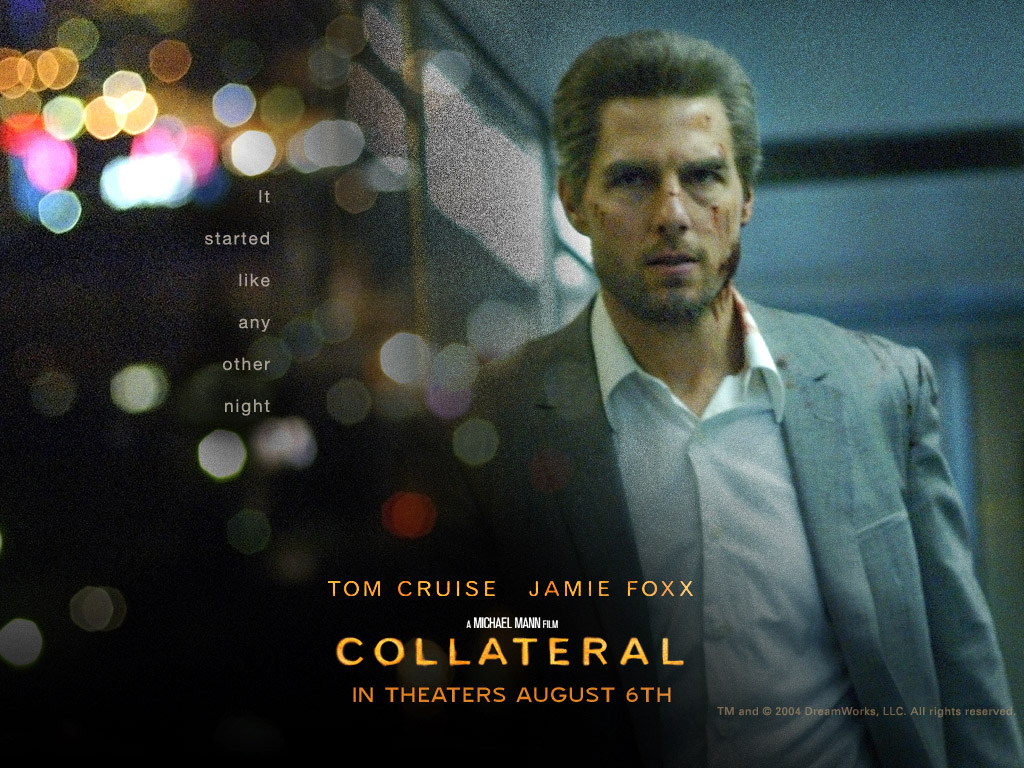
A cab driver finds himself the hostage of an engaging contract killer as he makes his rounds from hit to hit during one night in Los Angeles. He must find a way to save both himself and one last victim.
Collateral is another iconic and suspenseful thriller that graced the screens of the cinema in 2004. Starring Tom Cruise, Jamie Fox and Jada Pinkett Smith, Collateral holds the essence of a classic thriller with an innocent cab driver Max (Jamie Fox) who becomes caught up in the Dramas of the contracted killer Vincent (Tom Cruise) and must find a way to overcome his hostile actions and protect the people on the hit list, which becomes more Relevant to Max as the story unfolds.
Incredibly written by Stuart Beattie and Directed by Michael Mann Collateral achieved:
Best Performance by an Actor in a Supporting Role Jamie Foxx |
| Best Achievement in Film Editing Jim Miller Paul Rubell Trailer |
This trailer is extremely powerful however i believe it is somewhat irregular compared to other traditional thriller trailers. There is a wider variety when assessing the speed of editing in each sequence, there are sections where the editing is extremely fast where there is a strong amount of fast paced and suspenseful action on screen with impacting non diegetic music which is then juxtaposed to the calmer diegetic speech of the characters in the trailer and a decrease in the speed of editing within the trailer. This is effective as it allows the audience to experience a diverse range of emotions and feelings while they are watching the trailer and there are sections when they can slightly relax and then contrasted through moments of climax which altogether instigates apprehension yet also to some degree makes them feel shocked and further fully engaged in the action.
The trailer has a powerful and brutal start with the presentation of the hostile behaviour/actions of Tom Cruise shooting the man at the table. This immediately shocks the audience and they question why he done this as the setting looked rather calm and almost innocent. What Cruise tells Fox next the audience can infer that this is a lie based on the fact that in the previous picture they witnessed him kill another man so by telling him he is a real estate worker is obviously a lie. Where we are next introduced to the Police force, the audience assume that they will be in pursuit of Cruise based on him killing the man in the opening shot. As the trailer progresses, it becomes evident that Cruise is a Hit-man who has assigned killings and it portrays Fox's involvement with him.
Technically, the trailer is very accurate, it holds the correct mix of diegetic and non diegetic sound and presents the action throughout the film effectively without giving too much of the plot away. The names of the people involved in the film are inserted correctly throughout the trailer and helps move the action on screen along and separates time between the sequences. The editing allows the audience to follow the different stories of the film and illustrates what parts everyone involved plays within the film such as Mark Ruffalo as the head police officer in pursuit of the Tom Cruise, Jamie Fox as the innocent by-stander involved in the plot and Tom Cruise as the hostile main character with hits he must carry out throughout the night and the editing helps the audience establish the relationships between the different characters.

Digital Technology
Collateral is one of the first films to use digital cameras for filming, Michael Mann chose to use Viper Film Stream High - Definition cameras to film many of the scenes within the film, this can sometimes be detected through the glow of the picture which was absent in previous films which did not use digital technology. This gave the film an edge when introduced to the film industry as people were not used to this picture on screen and this is one of the reasons why the film gained a large audience.
Scenes within the film where the LA skyline or background are seen, the digital technology is prominent and visible. Furthermore, there was a particular shot that Michael Mann took where a coyote ran across the road and based on the Viper Film technology was able to do this spontaneously without an lighting set up as the digital camera was able to adapt to the low level of lighting.
Scene Analysis
This scene is effective as the audience know prior to this event that Vincent is a hostile and brutal killer, and therefore, when the criminals fray from helping Max and instead hold him at gunpoint and take Vincent's briefcase, they can infer that something unfortunate is about to happen to these people and they believe that they have made a mistake by doing so. As they walk away with the briefcase, Vincent steps into the picture supported by suspenseful and menacing music. When he establishes that they have his briefcase and the criminals further threaten Vincent, the audience brace themselves for trouble. Although they anticipate this, the audience are still shocked by the abruptness of the Killings of the criminals and furthermore reinforces the hostility of Vincent's character, topped off by the double shooting of one of the criminals to make sure that they are dead.
This scene offers a lot of suspense for the audience as they question whether the police will realise what has happened prior to this and whether they will establish what kind of person Vincent is. They know what is in the boot of the car and are afraid for both Max and the Police officers safety. This anxiety is increased where tension is building through the questioning by the police officers and when Vincent explains to Max that if the officers establish what is in the boot of the car then they will be killed, the audience begin to anticipate something terrible such as the killings of the officer. The non diegetic sound throughout this part of the scene aids in creating tension where the men step out of the car and Vincent is holding a gun, this implies that he is about to shoot the officers. When the officers get called to another incident, the audience are allowed to feel relieved that nothing is going to happen and find it quite ironic that where the police officers have just been called to s where Vincent has murdered a victim.
35mm Picture Scenes
This scene was filmed with a 35mm lens, this means that the quality of the picture is better than previous films which did not use this quality of digital filming. Examples of improvement of image from 50mm to 35mm can be seen through the width f the screen. The 35mm picture captures more of the setting through a wider lens and for a location such as a nightclub, this could work effectively because more of the venue you can capture, the more reality you bring to the audience and they can imagine themselves being there. Although in some instances the image is not always clearer than previous lenses in length such as the 50mm, it can be justified that in most cases the quality is of a high definition standard and the width of the picture makes up for this.
Facts on the film
The film was co-produced by DreamWorks and Paramount pictures with DreamWorks liable for North American rights while Paramount were liable for international rights. When Paramount brought DreamWorks in 2006, they also became liable for US and Canadian rights. In March of 2010, Paramount released Collateral on Blu-ray making it the first region 1 film they were to release o the new technology.
Collateral was on DreamWorks books for 3 years and was initially said to be directed by Mimi Leder and was the passed to Janusz Kaminski, however, it was not until Russell Crowe expressed interest in playing Vincent that the story began to pick up interest.
Saturday, 28 December 2013
No Country For Old Men
No country for old men

Synopsis
Hunter Llewelyn Moss establishes the left-overs of multiple drug runners who have murdered each other in a bloody shootout. Moss also discovers 2 million dollars remaining at the scene and decides to help himself. Little does he know that he has now perturbed a psychopathic killer, Anton Chigurh, and that he is now on his tail after the money in his possession. As the pursuit gets more intense, more people suffer at the hands of the men's dispute and it becomes a question of who will come out on top...
Film setup
Box Office
This film overall exceeded its budget so therefore has made a profit. This is a major factor and most likely the most important element in determining a films success.
Trailer:
The trailer begins with some light music and a compilation of images that have a subtle tone which is then juxtaposed to the slightly menacing music that creeps in after this companioned with the deep and threatening tone of Anton's voice. Even though the coin toss is an innocent proceeding, Anton makes it seem threatening and the audience can infer that there is a deeper meaning to it.

Synopsis
Hunter Llewelyn Moss establishes the left-overs of multiple drug runners who have murdered each other in a bloody shootout. Moss also discovers 2 million dollars remaining at the scene and decides to help himself. Little does he know that he has now perturbed a psychopathic killer, Anton Chigurh, and that he is now on his tail after the money in his possession. As the pursuit gets more intense, more people suffer at the hands of the men's dispute and it becomes a question of who will come out on top...
Film setup
Box Office
Budget:
$25,000,000 (estimated)Opening Weekend:
£1,257,183 (UK) (18 January 2008)Gross:
$74,273,505 (USA) (4 April 2008)This film overall exceeded its budget so therefore has made a profit. This is a major factor and most likely the most important element in determining a films success.
Trailer:
The trailer begins with some light music and a compilation of images that have a subtle tone which is then juxtaposed to the slightly menacing music that creeps in after this companioned with the deep and threatening tone of Anton's voice. Even though the coin toss is an innocent proceeding, Anton makes it seem threatening and the audience can infer that there is a deeper meaning to it.
Thursday, 19 December 2013
Source code
Source Code

The source code is an iconic thriller based on an ex soldier who wakes up in another persons body and discovers that he is on a mission to find the person who is aiming to bomb a train. Little does he know he only has roughly 8 minuets to find this person and identify him to his authorities. He encounters different characters throughout his journey as well as a horrific and overwhelming truth and he is left with a big decision in relation to his fate.
Film Infrastructure
Director:
Gross:
$54, 696, 902 (USA) (10 July 2011)
Audience experience
The Source Code keeps it's audience on the edge of their seat while allowing them to enjoy good quality film. The timed mission aspect of the film brings out the task completing instinct in the audience and they find themselves close to Jake Gyllenhal helping him to solve the mystery whereas the growing chemistry between himself and Michelle Monaghan with subtle humour helps the audience thoroughly enjoy the film from the beginning to end.

This is further supported by the other actors in the film which act as a huge compliment to the enjoymenty factor with their heightened performances. Overall, the film meets the criteria of a strong psychological thriller/thriller mystery.
Selected Review
A reviewer of the film described the media text as beautiful cinematography that has the capacity to do Chicago extremely proud.
The ambiguous ending to the film means that their are practically more questions than answers by the audience after the film, however, the film feels right with this style of ending as it leaves the audience second guessing and leaves an open discussion.
Finally, the film is highly recommended catering suspense, romance, mystery and thrills which make the film an all round masterpiece.
Trailer
This is a very effective trailer in portraying the main ideas about the film. The opening is extremely effective as it engages the audience with a sense of illusion and then shocks them by the heightened pace of the following shots almost like a vision which is effective when they see Jake wake up and they are immediately keen to understand the linkage and relevance of this vision. The shot of him looking into the mirror and not seeing his known face makes the audience feel dread where they relate this situation to themselves and begin to think how they would react in that scenario which engages them further.
The explosion of the train provides another abrupt shock and the audience are baffled by the action and content of the trailer and are eager to see more. The trailer then goes on to explain aspects of the film so the audience can gain an understanding of what is actually going on and the juxtaposition between the setting of the train and the desolute room the captain finds himself in presents to the audience different places at different times which help them depict other features of the film and have them guessing about what the film could be about.
The trailer then goes on to show the different side of the film with the relationship between the main male and female actors and how he wants to save her from her pressed fate. This appeals to a wider audience as more feminine people can begin to relate to the film with interest of a relationship and this also makes the trailer more versatile and appealing to different audiences.
The style of editing is effective throughout the trailer using fades to highlight a change in time and location while straight cuts are used to keep the action consistent and maintain some form of continuity.
The sound throughout the trailer is important based on the fact that it is the key to having an impact on the audience. As the trailer begins the provoking non-diegetic music mixed with the diegetic sound of the characters speaking is effective as it gives the audience a sense of illusion and the compilation of cinematic boom sounds aids the tension experienced by the audience. The sound correlates effectively with the action on screen and as the speed of editing increases, so does the tone of the music to create suspense and the audience are incapable of drawing away from the action.
First 5 minuets
The Source Code as a strong opening. The audience infer from the way he is that the Captain seems confused and the compilation of events that follow his awakening add to this effect as they are focused on and registered by the captain which has relevance later on in the film. He then goes on to explain who he is and the audience then begin to understand why he might be confused.
The Soundtrack in the background represents mystery and illusion to aid the idea that he is confused. As regular things keep occuring the juxtaposition between normality and the surrealness he finds in everything going on around him is enhanced. The crane shots of the train going along are helpful in giving the scene a sense of direction. These three factors; the sound, shots of the train and events on the train are linked to show that the action is building to something and thus makes the audience feel suspenseful, and anticipating something bad as they relate themselves to the situation captain stevens is in.
He then looks into the mirror which has serious impact on the audience as they are filled with intrugue and confusion and questioning why his reflection is different. However, the audience then go on to relate the factors to each other and complete the equation which is that the Captain is confused because he does not know who he is and that his identity is not what it seems to be.
After the mirror event, Captain's anxiety is heightened which is companioned by an increase in the speed of editing to make the audience feel tense and uneasy while watching. The tension continues to build and the audience are engaged to a maximum level and then the shock of the explosion of the train leaves the audience bewildered and in awe.

The source code is an iconic thriller based on an ex soldier who wakes up in another persons body and discovers that he is on a mission to find the person who is aiming to bomb a train. Little does he know he only has roughly 8 minuets to find this person and identify him to his authorities. He encounters different characters throughout his journey as well as a horrific and overwhelming truth and he is left with a big decision in relation to his fate.
Film Infrastructure
Director:
Writer:
Ben Ripley
Budget:
$32,000,000 (approximately)
Opening Weekend:
$14,812,094 (USA) (3 April 2011, 2961 Screens) $32,000,000 (approximately)
Opening Weekend:
Gross:
$54, 696, 902 (USA) (10 July 2011)
Audience experience
The Source Code keeps it's audience on the edge of their seat while allowing them to enjoy good quality film. The timed mission aspect of the film brings out the task completing instinct in the audience and they find themselves close to Jake Gyllenhal helping him to solve the mystery whereas the growing chemistry between himself and Michelle Monaghan with subtle humour helps the audience thoroughly enjoy the film from the beginning to end.

This is further supported by the other actors in the film which act as a huge compliment to the enjoymenty factor with their heightened performances. Overall, the film meets the criteria of a strong psychological thriller/thriller mystery.
Selected Review
A reviewer of the film described the media text as beautiful cinematography that has the capacity to do Chicago extremely proud.
The ambiguous ending to the film means that their are practically more questions than answers by the audience after the film, however, the film feels right with this style of ending as it leaves the audience second guessing and leaves an open discussion.
Finally, the film is highly recommended catering suspense, romance, mystery and thrills which make the film an all round masterpiece.
Trailer
This is a very effective trailer in portraying the main ideas about the film. The opening is extremely effective as it engages the audience with a sense of illusion and then shocks them by the heightened pace of the following shots almost like a vision which is effective when they see Jake wake up and they are immediately keen to understand the linkage and relevance of this vision. The shot of him looking into the mirror and not seeing his known face makes the audience feel dread where they relate this situation to themselves and begin to think how they would react in that scenario which engages them further.
The explosion of the train provides another abrupt shock and the audience are baffled by the action and content of the trailer and are eager to see more. The trailer then goes on to explain aspects of the film so the audience can gain an understanding of what is actually going on and the juxtaposition between the setting of the train and the desolute room the captain finds himself in presents to the audience different places at different times which help them depict other features of the film and have them guessing about what the film could be about.
The trailer then goes on to show the different side of the film with the relationship between the main male and female actors and how he wants to save her from her pressed fate. This appeals to a wider audience as more feminine people can begin to relate to the film with interest of a relationship and this also makes the trailer more versatile and appealing to different audiences.
The style of editing is effective throughout the trailer using fades to highlight a change in time and location while straight cuts are used to keep the action consistent and maintain some form of continuity.
The sound throughout the trailer is important based on the fact that it is the key to having an impact on the audience. As the trailer begins the provoking non-diegetic music mixed with the diegetic sound of the characters speaking is effective as it gives the audience a sense of illusion and the compilation of cinematic boom sounds aids the tension experienced by the audience. The sound correlates effectively with the action on screen and as the speed of editing increases, so does the tone of the music to create suspense and the audience are incapable of drawing away from the action.
First 5 minuets
The Source Code as a strong opening. The audience infer from the way he is that the Captain seems confused and the compilation of events that follow his awakening add to this effect as they are focused on and registered by the captain which has relevance later on in the film. He then goes on to explain who he is and the audience then begin to understand why he might be confused.
The Soundtrack in the background represents mystery and illusion to aid the idea that he is confused. As regular things keep occuring the juxtaposition between normality and the surrealness he finds in everything going on around him is enhanced. The crane shots of the train going along are helpful in giving the scene a sense of direction. These three factors; the sound, shots of the train and events on the train are linked to show that the action is building to something and thus makes the audience feel suspenseful, and anticipating something bad as they relate themselves to the situation captain stevens is in.
He then looks into the mirror which has serious impact on the audience as they are filled with intrugue and confusion and questioning why his reflection is different. However, the audience then go on to relate the factors to each other and complete the equation which is that the Captain is confused because he does not know who he is and that his identity is not what it seems to be.
After the mirror event, Captain's anxiety is heightened which is companioned by an increase in the speed of editing to make the audience feel tense and uneasy while watching. The tension continues to build and the audience are engaged to a maximum level and then the shock of the explosion of the train leaves the audience bewildered and in awe.
Saturday, 14 December 2013
Thriller Recipe
Thriller Recipe

There are certain requirements in a film in order to place it within the thriller genre. This is based on the fact that a thriller is designed to make its audience experience suspense and tension and also feel a degree of terror through what they experience while watching the film. Therefore, a team who are creating a thriller film, must take into account all of the different genre conventions that relate to a thriller film. Furthermore, the thriller genre is such a vast one that it is most divided into sub genres. Here are different examples of sub-genres within the thriller genre:
- Spy thrillers (The Bourne Ultimatum)
- political thrillers (The Manchurian Candidate)
- conspiracy thrillers (Zero Dark Thirty)
- Legal thrillers (The Departed)
- Psychological thrillers (Silence of the lambs)
What all of these sub genres have in common is the fact that they all come under the title of suspense thriller and are divided based on the storyline and content of their films. Therefore, it makes it evident that themes such as suspense, tension and anxiety are key to the infrastructure and success of a thriller film. However, there are techniques and criteria that are followed film makers in order to install these themes within their thriller films. Here are examples of thriller conventions:
The McGuffin
The McGuffin as established by Alfred Hitchcock is the source that drives the plot and gives reason to the film for both the villains and the "hero" or favoured character. It has been identified that the audience do not truly register the McGuffin and have too much care for it, they are just aware that the characters are associated with this item but their main concern is with the main character and how they will escape the villains and fulfil their goals set throughout the film. This installs a thriller film with a stronger plot and thus helps filmmakers develop outward from the McGuffin.

Red Herring
A Red Herring is another useful convention of the thriller genre, it allows the plot/storyline to be abruptly or gradually directed in a different direction. This is useful as it often provides the audience with a shock as what they believe to be the bulk of the storyline is changed and they have to adjust and adapt to this which can be very shocking. A strong example of a red herring from Hitchcock's Psycho, is the Bates Motel, as prior to this, the audience would belief that the storyline would be about the pursuit of Marion by the other characters, but the Motel has something else in store for them. This shows how the Red Herring can be very effective in bringing he shock factor into film.

Monday, 9 December 2013
Alfred Hitchcock
Alfred Hitchcock

Alfred Hitchcock is an iconic and recognised film hero of the 20th century, directing over 60 films throughout his long 55 year career, he was heavily renowned for his involvement in the thriller genre and evolving cinema to make the audience experience a wider variety of feelings and emotions while watching his films and the camera developments he was able to make to create certain techniques.
Achievements
- 2 Golden Globes
- 8 Laurel Awards
- 5 Lifetime achievement awards
- Academy award as best director
- Film Rebecca nominated for 11 Oscars and won the academy award for best picture of 1940
- Received a Knighthood in 1980
- multiple remakes of well known as well as silent movies in modern times
The master of suspense
Hitchcock holds this nickname based on how his films affected their audiences and his unique editing style as well as bewildering storylines within his work. He had 20th century audiences shocked, on edge and fired up while watching his films and provoked authorities at the top of the entertainment business with the controversial and original contents of his film. He manoeuvred the camera to make it move in a way that is similar to a person's gaze, subjecting viewers to engage in a form of voyeurism. He conducted shots to increase tension, fear, or empathy, and used inventive film editing. His stories are often starring fugitives on the run from the law alongside blonde female characters there to build the storyline and appeal to a wider variety of audience with romance and often maintaining, cunning and manipulative attributes for the other stars to work against/with.
Famous Films


Alfred Hitchcock is an iconic and recognised film hero of the 20th century, directing over 60 films throughout his long 55 year career, he was heavily renowned for his involvement in the thriller genre and evolving cinema to make the audience experience a wider variety of feelings and emotions while watching his films and the camera developments he was able to make to create certain techniques.
Achievements
- 2 Golden Globes
- 8 Laurel Awards
- 5 Lifetime achievement awards
- Academy award as best director
- Film Rebecca nominated for 11 Oscars and won the academy award for best picture of 1940
- Received a Knighthood in 1980
- multiple remakes of well known as well as silent movies in modern times
The master of suspense
Hitchcock holds this nickname based on how his films affected their audiences and his unique editing style as well as bewildering storylines within his work. He had 20th century audiences shocked, on edge and fired up while watching his films and provoked authorities at the top of the entertainment business with the controversial and original contents of his film. He manoeuvred the camera to make it move in a way that is similar to a person's gaze, subjecting viewers to engage in a form of voyeurism. He conducted shots to increase tension, fear, or empathy, and used inventive film editing. His stories are often starring fugitives on the run from the law alongside blonde female characters there to build the storyline and appeal to a wider variety of audience with romance and often maintaining, cunning and manipulative attributes for the other stars to work against/with.
Famous Films
Vertigo

North by Northwest

Psycho
.jpg)
Thursday, 5 December 2013
Thriller Reviews
The Catalyst
This is a very strong opening to a thriller film, it contains many elements associated with the thriller genre. The editing is very distinct and accurate accompanied by the use of a wide variety of shot techniques. There is good match on action at the beginning where the mysterious black-suited character is breaking into the house and this is continued up the stairs on the way to the bedroom. The use of effects such as the sniper effect used companioned with the heavy breathing suggests focus and builds tension as the audience anticipate that the characters making the transaction will get shot. The cross-cutting of the editing after this of the man running and the villain is effective as it displays the emotions of both at that present time. The non-diegetic sound mixed with the diegetic sound of the character running is efficient as it helps create suspense and build up the essence of a chase. When he arrives at the car and the driver is unconscious, the audience feel tense as they do not know where the villain is, when he begins to strangle him from the backseat, the editing speeds u between the villain and the runner and therefore this helps the audience feel more shocked and on edge to find out whether he will escape death or not. The title becomes relevant with the child who he tells to be quiet in the backseat is revealed as it suggests that he will be in pursuit of the villain. The McGuffin is also established with the micro chip that is found on the floor near the car. The last image of the villain walking away is effective where it is partnered with the non-diegetic and irregular sound.
Despite this, there is room for improvement. Firstly, the scene was too long which may question how much of an opening it actually is. Also, shots such as when he produces the gun in the bedroom could have been divided into more shots to view the action from a wider variety of angles.
Waking up
Waking up is also a very strong piece of media text to represent the start of a film, however, the work entertains many attributes of a thriller trailer rather than an opening to a film. This can be seen in the pace and speed of the action, correlated with the narration and constant non - diegetic music within the film which creates the atmosphere of a trailer rather than an opening to a thriller film. The speed of editing is relatively at a quick pace and there is not much variation in the length of each shot which does not slow down the action and allow essential aspects of a thriller opening such as tension to increase as the audience are not allowed to relax and experience this action as they are watching intensely to keep up with the action as each shot quickly changes to the other. It can come across to the examiner that this group is attepting to cram in too much action in too little time and thus suffers from adopting the persona of a trailer rather than a thriller opening. Despite this, other features of the production are very effective in relation to the thriller genre. The black outfits of the characters in pursuit of the main character contrasted to the purity of the white T-shirts of the main character gives indication of the position that the different characters have in the film, with the characters in black being the established enemy. Furthermore, the ident used is very powerful with its bold white font contrasted to the black background with a strong symbol that is related to the text.
The Watched
This is another good example of a thriller opening. The title is thick, white and bold and effective when contrasted to the black background, similar to Waking up, although it could be percieved as simplistic. However, this film can lose marks based on location and setting. Where it is set in a school, this can imply a lack of effort in finding a location to film and means that the members of the group took an easy option in using the grounds of the school. However, this is only one interpretation, a school is a symbol of security, safety and innocence and the the fact that an anonymous and mysterious character dressed in black and suspicious clothes has breached the barrier of the school could be a way of showing that the character suspicious of being "watched" is now vulneerable and her safety has been impeeded. Furthermore, the non-diegetic sound in the background over the action is effective as it sounds extremely menacing and unclear, thus making the audience feel uneasy. This is key and meets the criteria of the thriller genre. Despite this, there is a lack of diegetic sound throughout the piece which helps the production adopt the style of a film and provide a wider variety of effects for the audience and help them further understand the action; an example of this could be an explanation on why the character may be watching the other character. Moreover, there is a wide variety of different shot types and angles which gives the film flavour, companioned with strong variation in shot lenghts. They have used Point of view shots appropiately, and long shots to help show the character being followed. Dissolves have also beeen utilised to portray time moving forward. All of these different factors put together makes this piece of media text very suspenseful and tense as the audience anticipate what will happen to the vulneerable victim as she is followed.
This is a very strong opening to a thriller film, it contains many elements associated with the thriller genre. The editing is very distinct and accurate accompanied by the use of a wide variety of shot techniques. There is good match on action at the beginning where the mysterious black-suited character is breaking into the house and this is continued up the stairs on the way to the bedroom. The use of effects such as the sniper effect used companioned with the heavy breathing suggests focus and builds tension as the audience anticipate that the characters making the transaction will get shot. The cross-cutting of the editing after this of the man running and the villain is effective as it displays the emotions of both at that present time. The non-diegetic sound mixed with the diegetic sound of the character running is efficient as it helps create suspense and build up the essence of a chase. When he arrives at the car and the driver is unconscious, the audience feel tense as they do not know where the villain is, when he begins to strangle him from the backseat, the editing speeds u between the villain and the runner and therefore this helps the audience feel more shocked and on edge to find out whether he will escape death or not. The title becomes relevant with the child who he tells to be quiet in the backseat is revealed as it suggests that he will be in pursuit of the villain. The McGuffin is also established with the micro chip that is found on the floor near the car. The last image of the villain walking away is effective where it is partnered with the non-diegetic and irregular sound.
Despite this, there is room for improvement. Firstly, the scene was too long which may question how much of an opening it actually is. Also, shots such as when he produces the gun in the bedroom could have been divided into more shots to view the action from a wider variety of angles.
Waking up
Waking up is also a very strong piece of media text to represent the start of a film, however, the work entertains many attributes of a thriller trailer rather than an opening to a film. This can be seen in the pace and speed of the action, correlated with the narration and constant non - diegetic music within the film which creates the atmosphere of a trailer rather than an opening to a thriller film. The speed of editing is relatively at a quick pace and there is not much variation in the length of each shot which does not slow down the action and allow essential aspects of a thriller opening such as tension to increase as the audience are not allowed to relax and experience this action as they are watching intensely to keep up with the action as each shot quickly changes to the other. It can come across to the examiner that this group is attepting to cram in too much action in too little time and thus suffers from adopting the persona of a trailer rather than a thriller opening. Despite this, other features of the production are very effective in relation to the thriller genre. The black outfits of the characters in pursuit of the main character contrasted to the purity of the white T-shirts of the main character gives indication of the position that the different characters have in the film, with the characters in black being the established enemy. Furthermore, the ident used is very powerful with its bold white font contrasted to the black background with a strong symbol that is related to the text.
The Watched
This is another good example of a thriller opening. The title is thick, white and bold and effective when contrasted to the black background, similar to Waking up, although it could be percieved as simplistic. However, this film can lose marks based on location and setting. Where it is set in a school, this can imply a lack of effort in finding a location to film and means that the members of the group took an easy option in using the grounds of the school. However, this is only one interpretation, a school is a symbol of security, safety and innocence and the the fact that an anonymous and mysterious character dressed in black and suspicious clothes has breached the barrier of the school could be a way of showing that the character suspicious of being "watched" is now vulneerable and her safety has been impeeded. Furthermore, the non-diegetic sound in the background over the action is effective as it sounds extremely menacing and unclear, thus making the audience feel uneasy. This is key and meets the criteria of the thriller genre. Despite this, there is a lack of diegetic sound throughout the piece which helps the production adopt the style of a film and provide a wider variety of effects for the audience and help them further understand the action; an example of this could be an explanation on why the character may be watching the other character. Moreover, there is a wide variety of different shot types and angles which gives the film flavour, companioned with strong variation in shot lenghts. They have used Point of view shots appropiately, and long shots to help show the character being followed. Dissolves have also beeen utilised to portray time moving forward. All of these different factors put together makes this piece of media text very suspenseful and tense as the audience anticipate what will happen to the vulneerable victim as she is followed.
Subscribe to:
Posts (Atom)